Case study 01 · Web3Connect.com · Deep dive 3 of 3
When almost nobody left a review
My marketplace launched and traffic grew steadily for nine months, but almost nobody left a review – the one thing the platform needed! Here are the five things I did to try to fix it.
Part of a larger project
Web3Connect.com is a B2B reviews marketplace for the blockchain industry that I founded, designed and built solo. This page covers the period after launch. For the background, the technical build and the commercial model, start at the Web3Connect.com overview.
How the business was meant to work
The monetisation model relied on competition for visibility. I created a flywheel, but it required the industry's commitment to spin:
A company gets verified reviews on one of its offerings.
Thier offering moves up the rankings and gains visibility.
Competitors notice – why is my competitor more visible than me?
Competitors get verified reviews – competition for visibility begins.
Competitors spend money to catch up and remove the display of competitors from thier profile page – by paying for a subscription and visibility multipliers. That is the revenue.
The winners advertise thier industry recognition. “#1 in Crypto Accounting, 2026” is a badge firms put on its website and LinkedIn, at no cost to me.
That brings in buyers, and buyer traffic is what justifies a company spending anything here in the first place – which makes step one easier next time round.
Seven steps, and all of them start in the same place – nothing happens without reviews. Reviews provide ranking movement, competitive pressure, revenue and free promotion.
Without reviews, this is just a directory. That is a genuinely useful thing to be, but it's not a business.
What the numbers actually said
I built a metrics dashboard to answer key questions. These drew from the extensive event tracking I'd implemented pre-launch.
- How many profiles had been claimed?
- How many reviews had been started, submitted, and approved for publishing?
- What service seeker engagement was there? (impressions, clicks, searches)
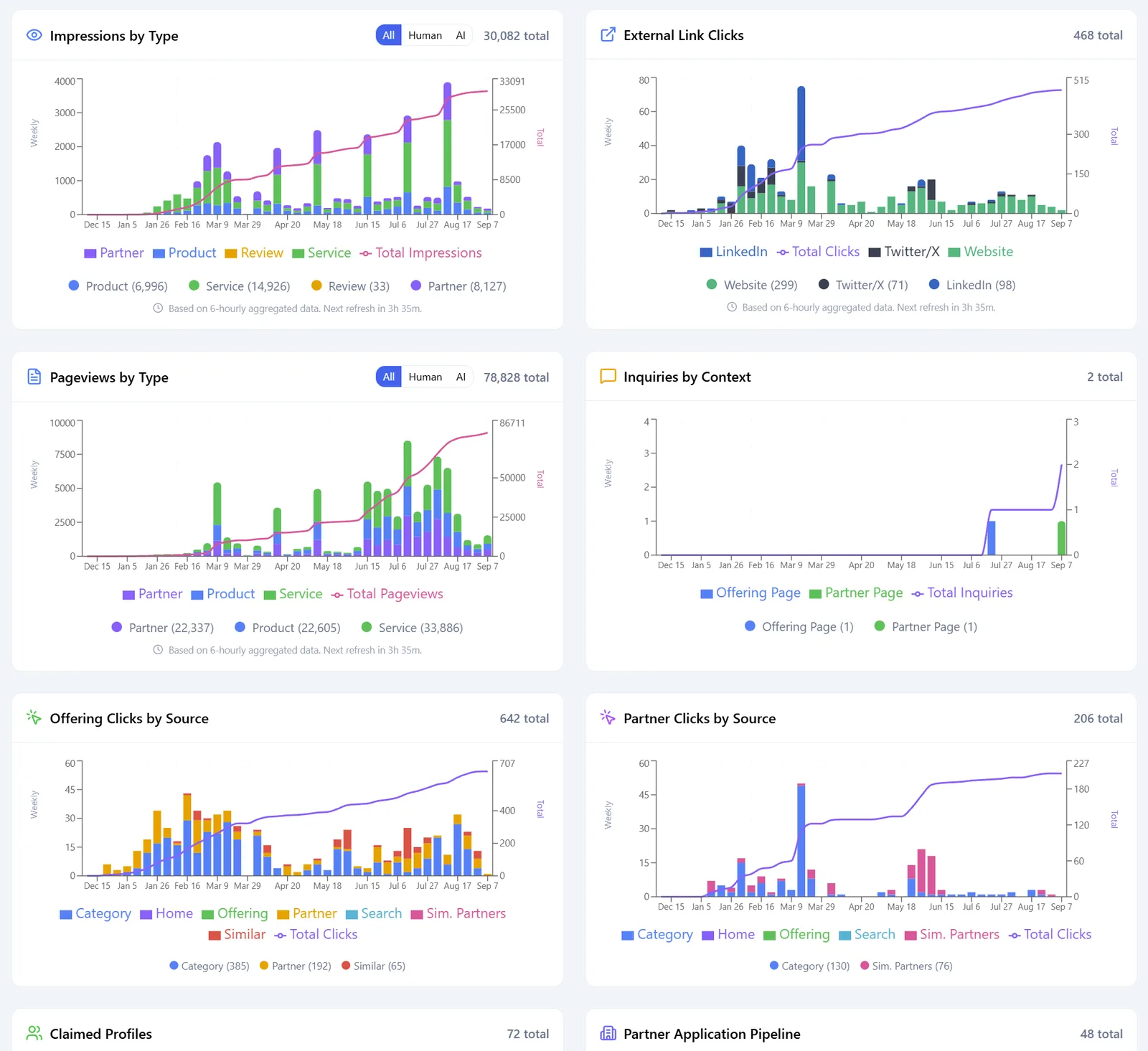
The buyer side of the marketplace was working. People were arriving, browsing and clicking through to suppliers. The supplier side was not. The value to buyers was superficial without reviews on suppliers.
Traffic was never the problem
The cycle was broken at step one (no reviews of partner offerings), and extra traffic wouldn't fix it. This is what redirected the next few months of work.
Three theories
Manual outreach and follow-up (LinkedIn, Telegram, X, etc) was moderately effective – partner profiles were being claimed – but they failed to progress to reviews.
I wrote down my theories on why partners may be doing nothing:
They don’t know they’re listed
Most profiles came from my own research, not from companies signing up. A firm could be ranked in four categories and have no idea the site existed.
They claimed it, then stopped
Claiming a profile takes two minutes. I never made clear what to do next, so a claimed profile could sit there indefinitely.
They don’t think it’s worth it
Asking a client for a review spends goodwill. On a new site with no proven audience yet, declining is a perfectly sensible decision.
Automate it rather than hire more people
I was relying on manual outreach to solve all three problems. I needed to automate more, so that the effort invested in onboarding a partner (directly or organically) would lead to reviews and spin the flywheel.
Everything below runs automatically, triggered by what people do, so it keeps working at no extra cost.
Catching partners at the right moment
When someone signs up with a work email address, I already have a signal of which company they work for. If I match thier domain name to a website of a company already listed but unclaimed, then this person can almost certainly speak for that company.
At the time,I was sending them a generic welcome email and ignoring the signal.
So I rebuilt the sign-up email flow to check for that match. If it finds one, it drops the welcome message entirely and makes the whole email about the profile that already has their company name on it.
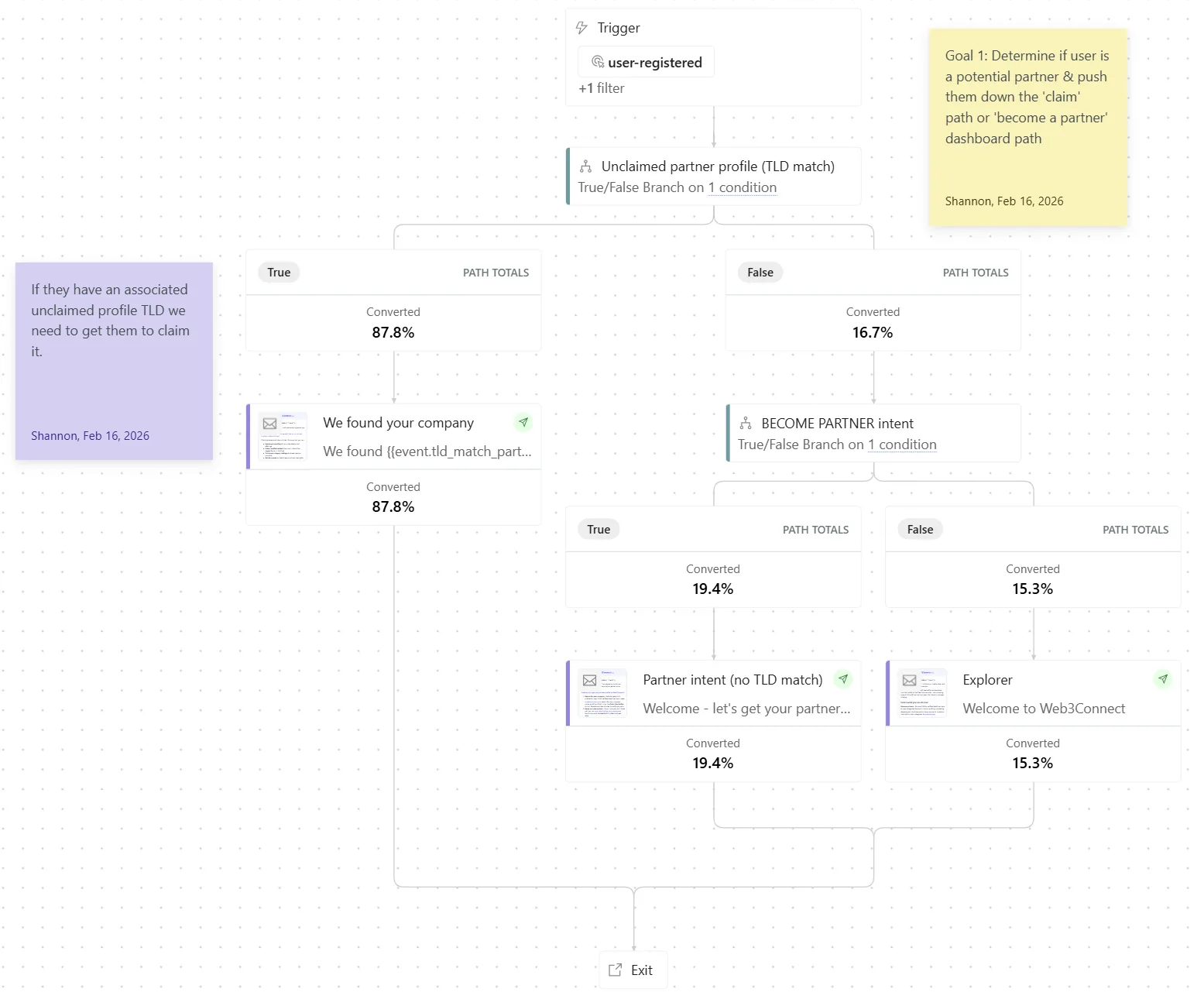
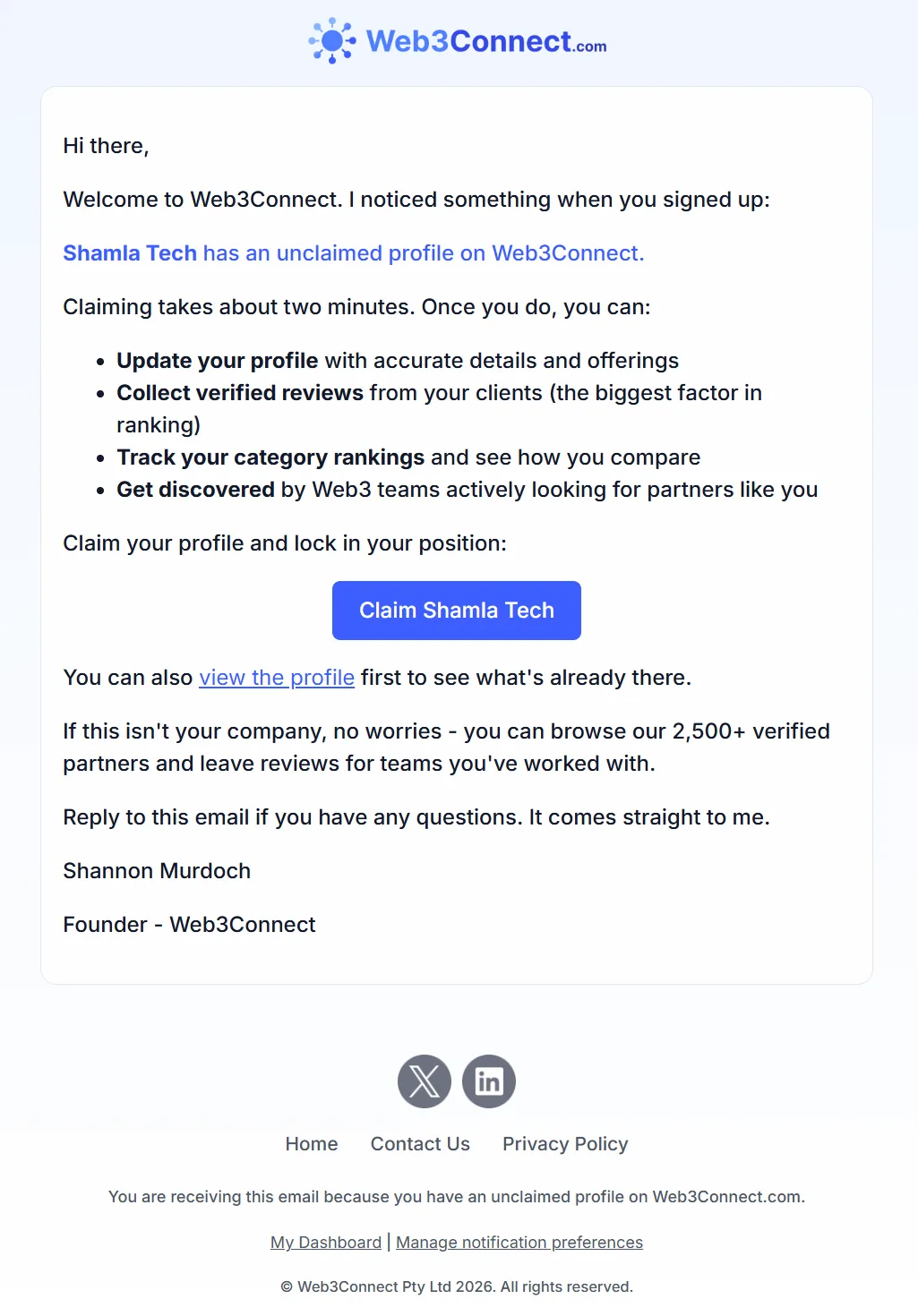
87.8% of those people claimed their profile, against 16.7% of people with no matching listing.
This helped close an hole in the onboarding process that had previously been unactioned.
In case they missed the email, I also placed a banner on their user dashboard highlighting their unclaimed profile.
Reaching companies who never visited
That left the much harder group: companies I had listed who had never visited the site at all.
Fortunately I already had an email address for many of them.
I wrote a six-email outreach sequence, testing two versions of every subject line and message, sent over about a month.
What to open with? The obvious choice is to explain the platform. I opened with their ranking instead — you are currently ranked #118 out of 118 in Crypto Accounting. My theory was that a specific (and slightly uncomfortable) fact about your own company gets more attention than a speil about a platform you've never heard of.
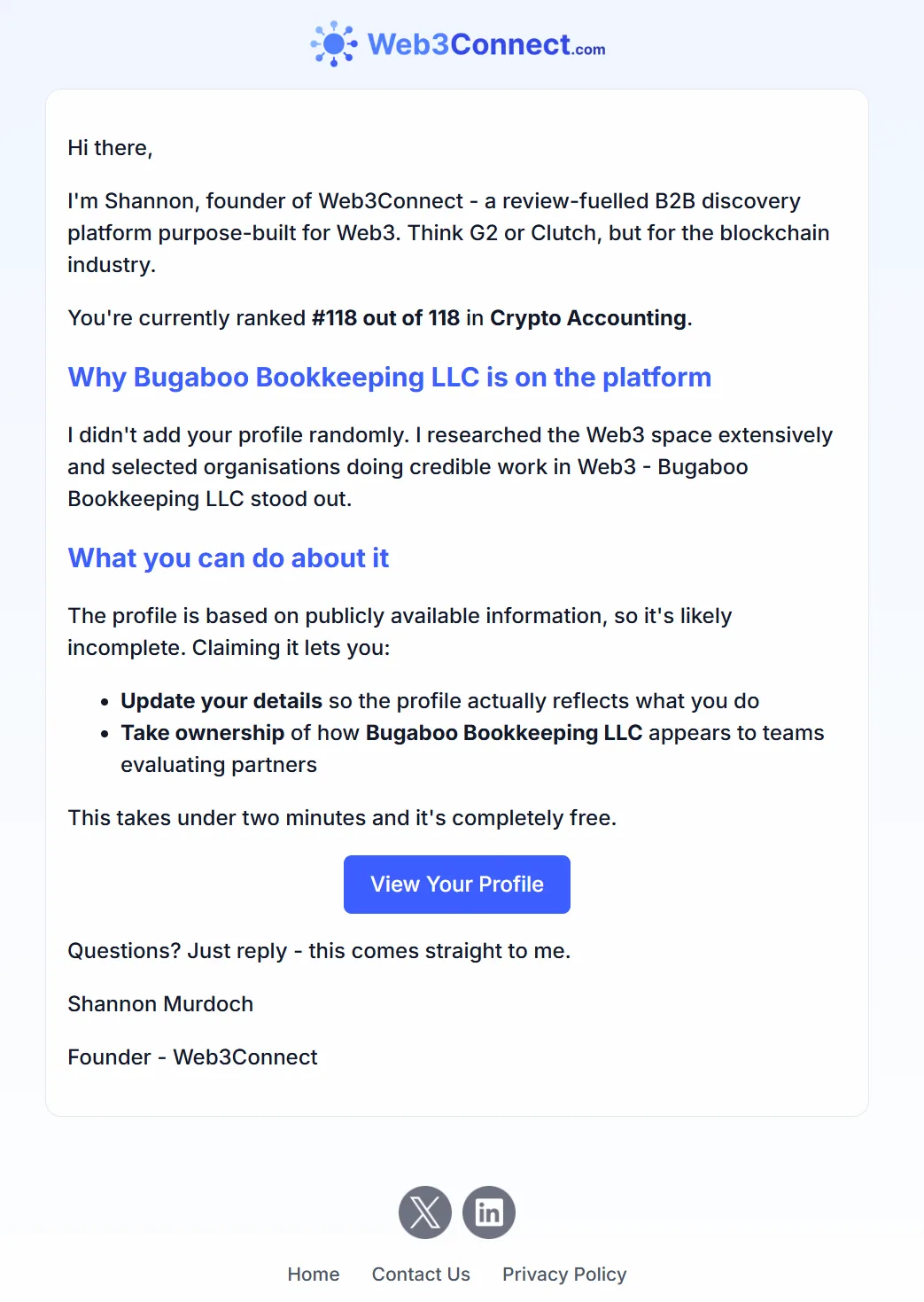
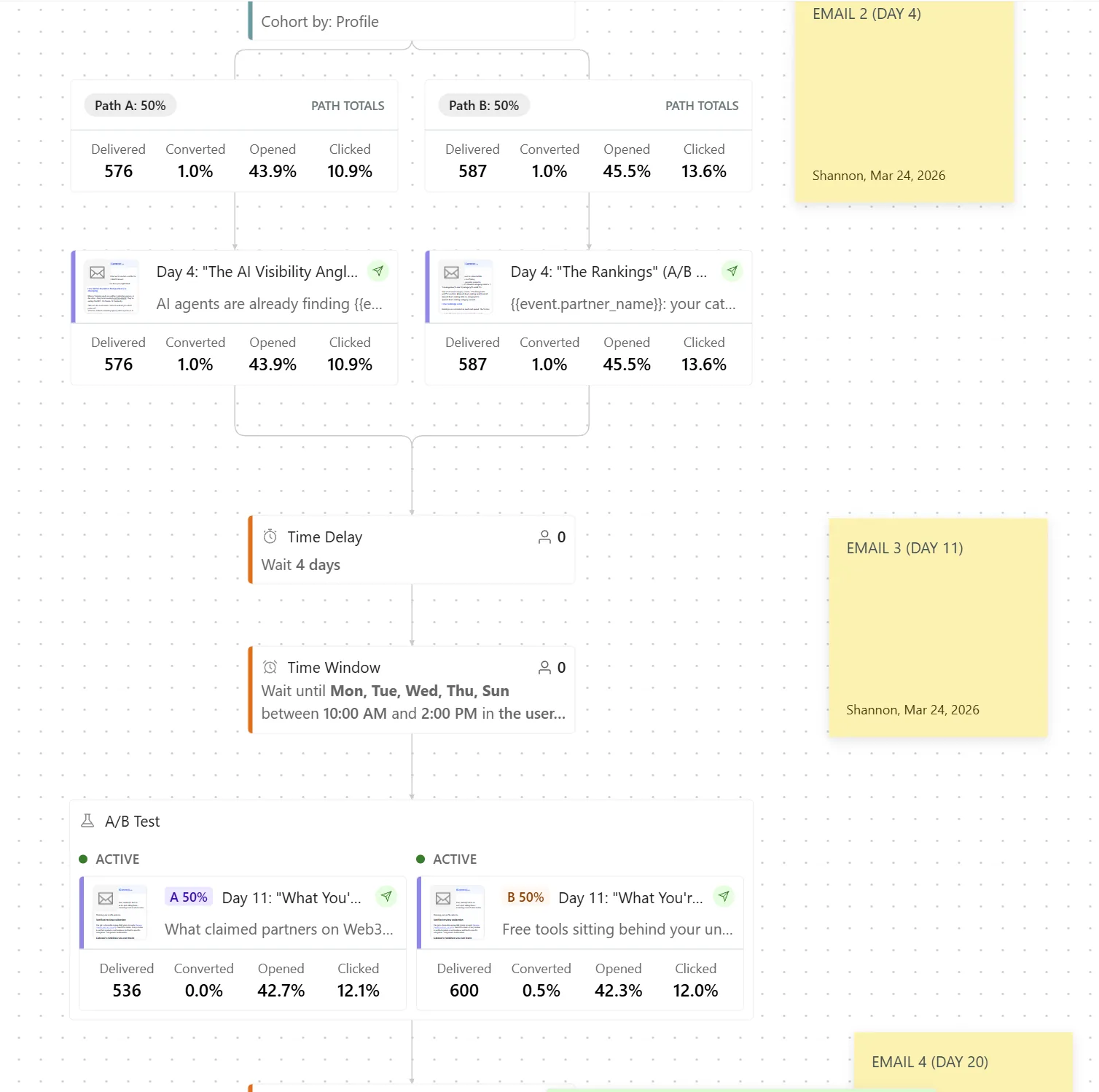
43–46% opened the emails and 11–14% clicked, which for cold outreach to businesses is healthy. 2% claimed their profile, falling towards 1% as the sequence worked through progressively less engaged companies.
That is a respectable cold email result, but nowhere near enough. It gets a company as far as the dashboard, but it doesn't spin our flywheel - only reviews do this.
My next initiative focused on the post-profile claim journey. How to get partners to get thier first review.
The small ask
After claiming thier profile, partners got busy and weren't taking the next step (get reviews!).
I acknowledged that requesting a review from clients requires post-sales process change, or effort from both the company and their clients. My thesis was that I had to make it as simple as possible for partners to act.
In my post-claim email campaign, the call-to-action was one thing they could actually do in the next five minutes: send one link to one client.
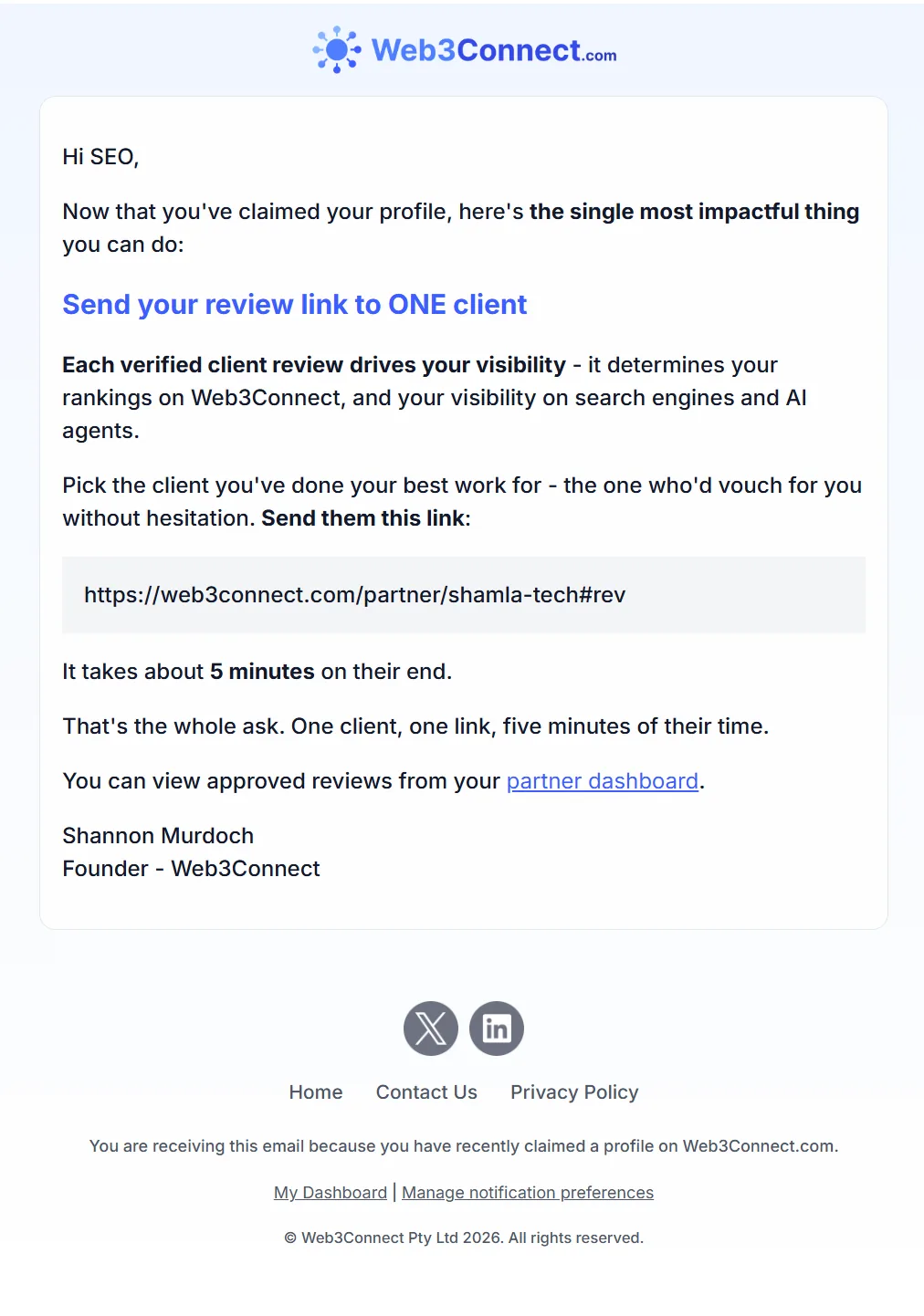
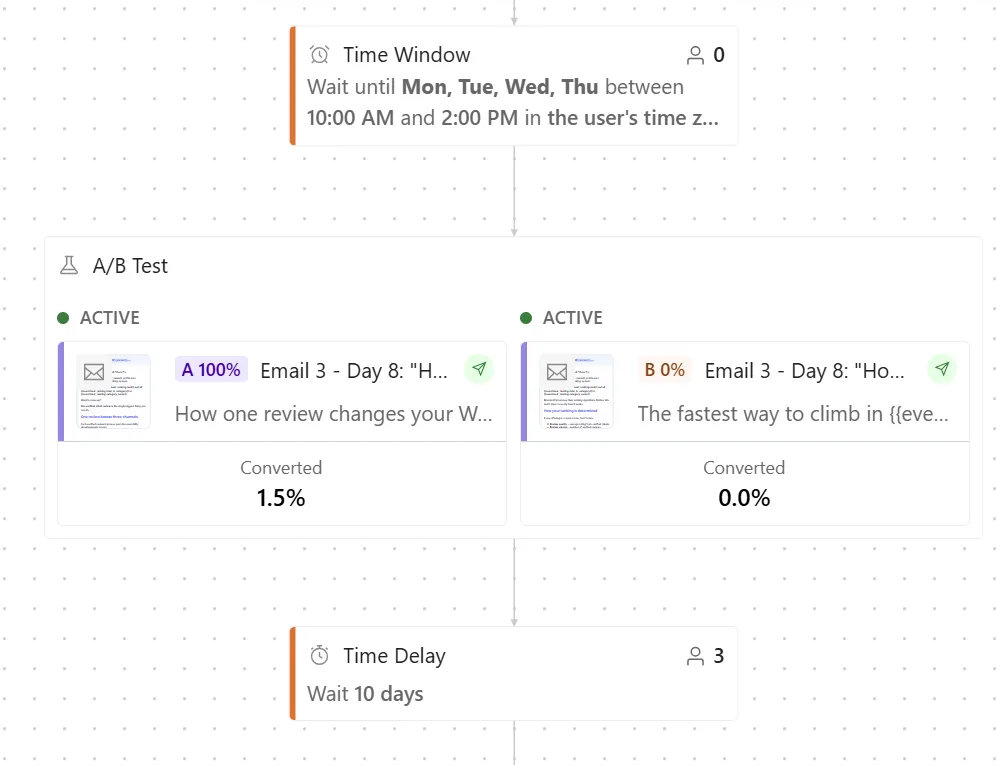
The five-email sequence had an overall 43.9% open rate and 30 draft reviews were attributed to it over the first 5 weeks.
The overall engagement peaked at 5.6% (click-though rate).
Was my thesis wrong?
I believed apathy was the main barrier to action, however after running a campaign to claim your partner profile (successful), followed by a campaign to obtain your first review – neither was driving completed reviews.
This led me to the thesis that the blocker to getting reviews wasn't the effort required, but the perceived value.
I was asking a company to spend real goodwill with a real client, in order to post on a site whose audience I couldn’t yet prove. That is the classic problem of starting a marketplace from scratch, and past a certain point better writing doesn’t solve it.
Proving traffic, combined with a urgency became the focus of my next experiment.
Showing companies where they ranked
Partners noticing their rankings and reacting wasn’t happening, because nobody was actively tracking them. A company could be losing to a rival every day and never know. So I put their ranking in the two places they already look.
First, an email every fortnight showing every category they compete in, their position, how many reviews they have, and how it has moved in the last 30 days:
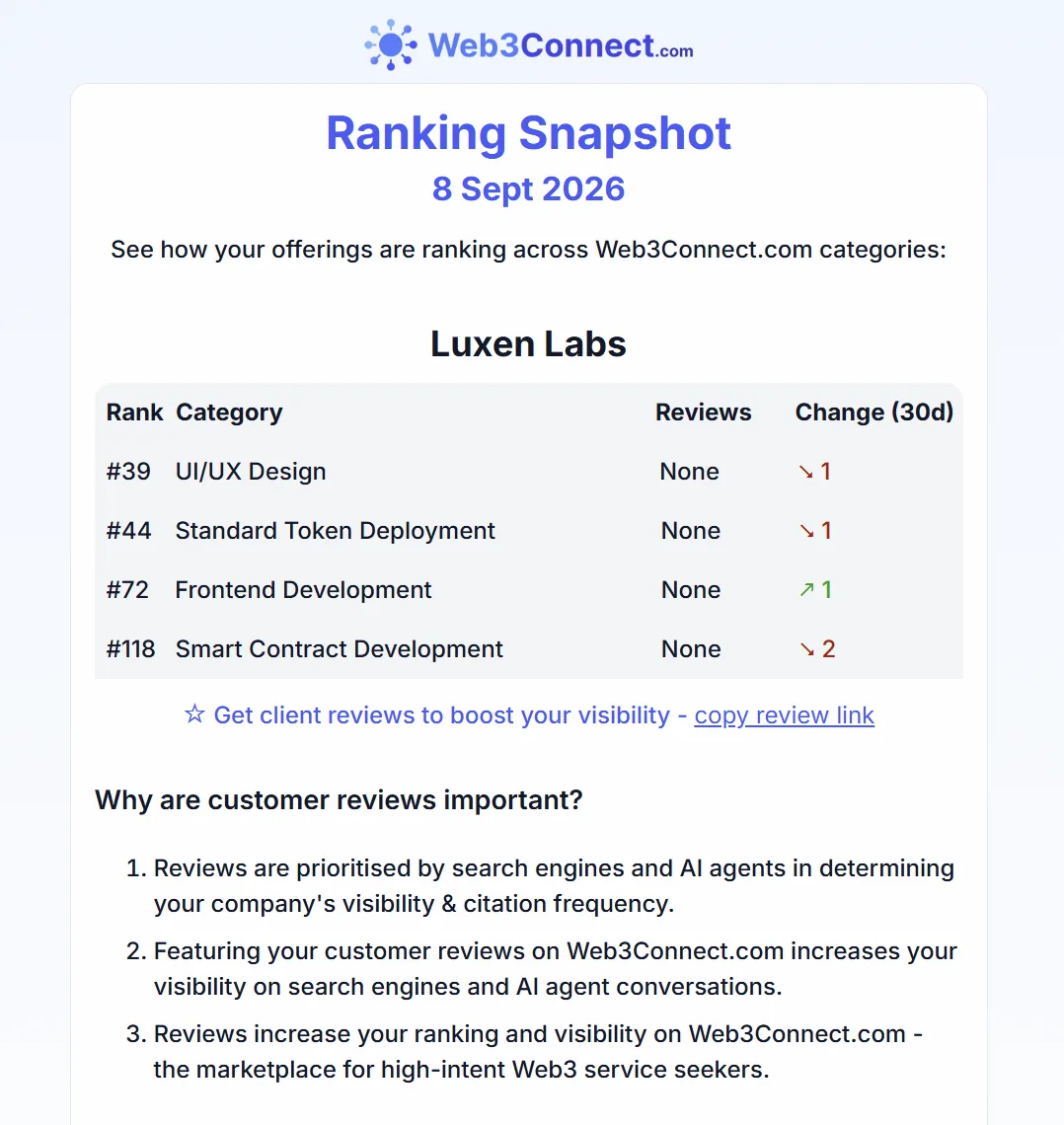
The ranking email got 10.8% click-through rate initially, trailing off to 3% over the following months.
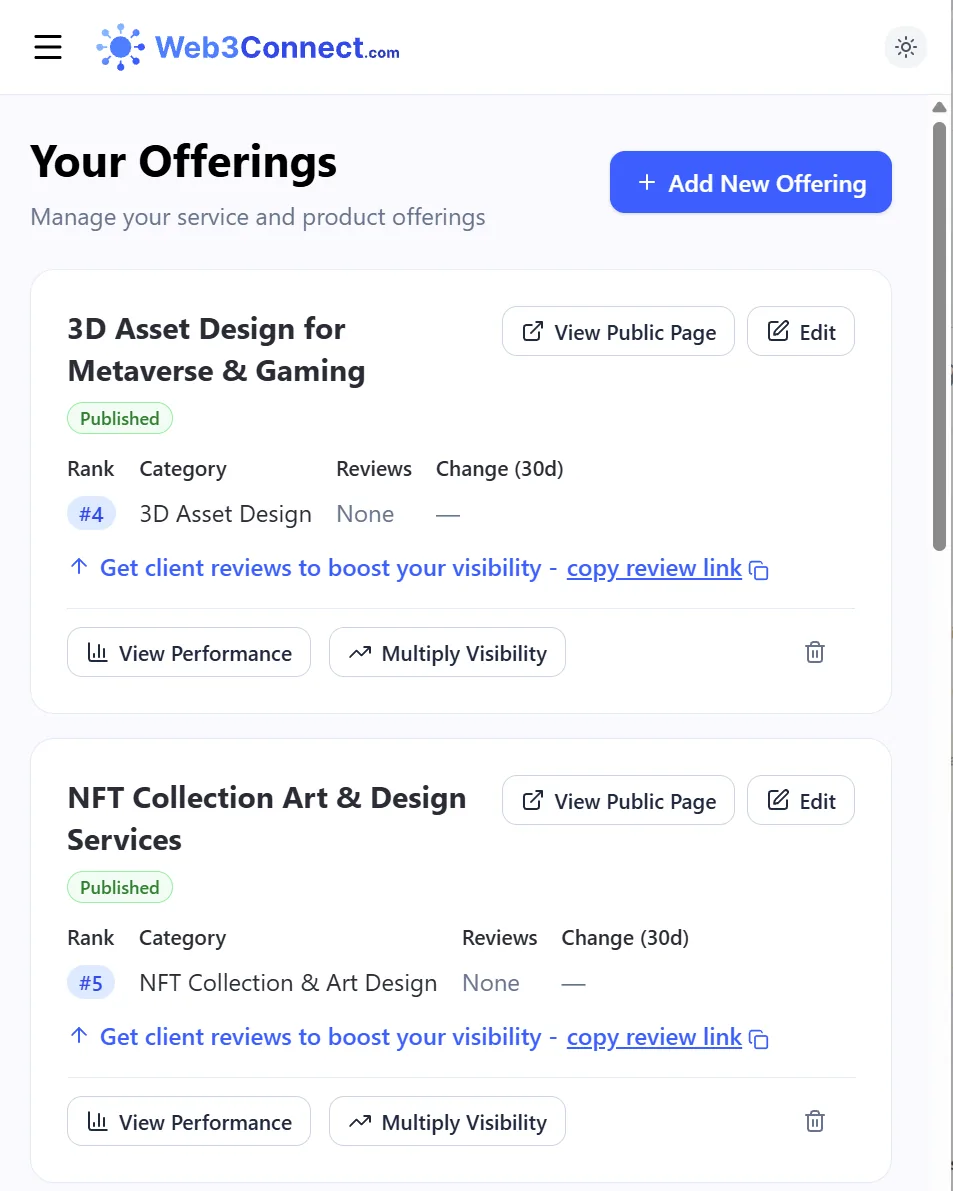
Second, in their dashboard, I added their category rank next to each offering with the review link one click away:
On the partner's analytics dashboard, instead of showing a company just its own numbers, I added their top competitor's figures for comparison – and the percentage difference for effect.
A clear call-to-action followed, with matching colours for visual association.
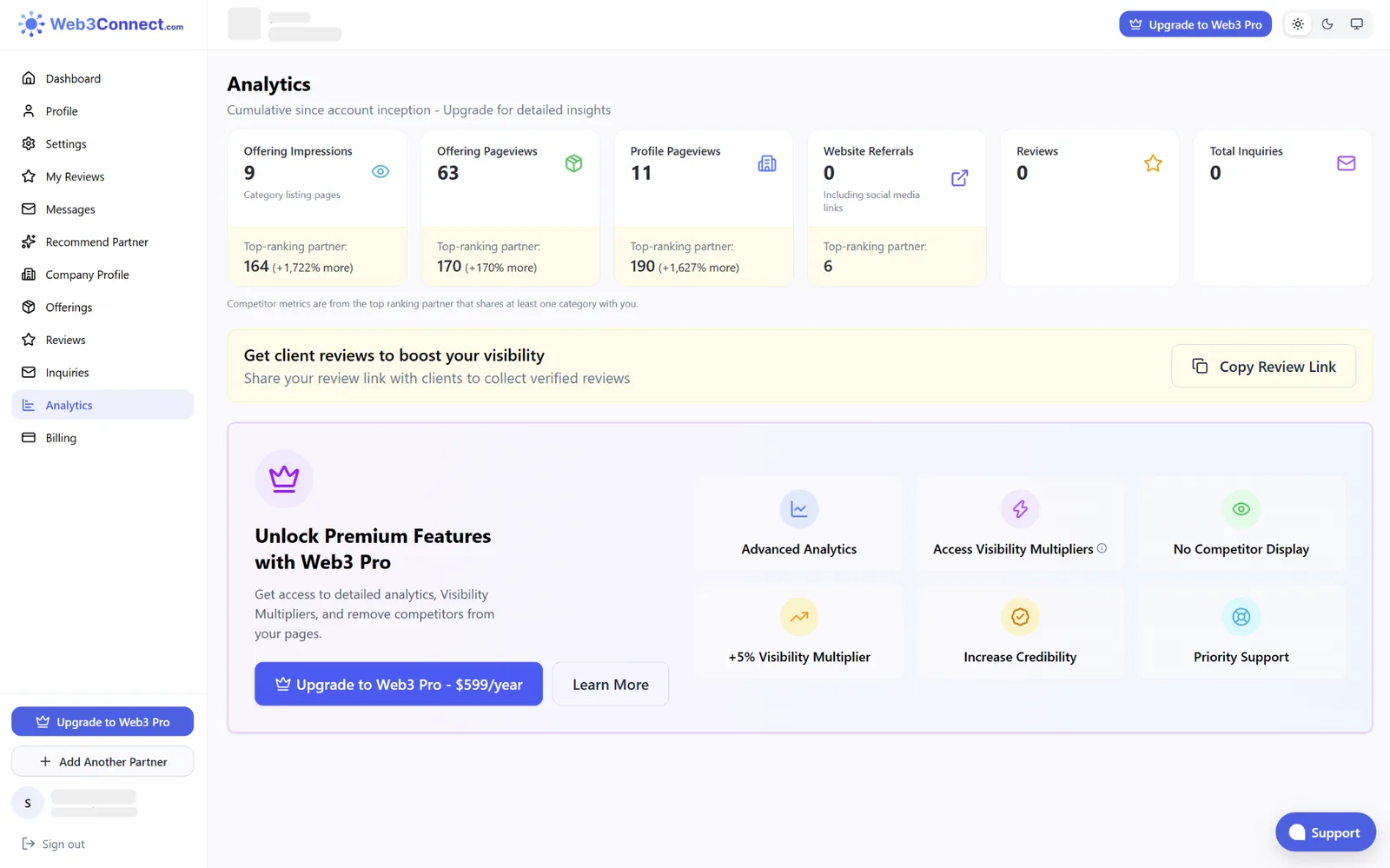
The dashboard changes don’t have a clean number of their own, because they only reach companies who are already logged in — they add to the outreach campaigns rather than replacing them.
| Intervention | Population | Converted |
|---|---|---|
| Sign-up email, company matched | Signed up themselves, email matched a listing | 87.8% |
| 6-email ‘claim your profile’ | Cold — never visited the site | 2% → 1% |
| 5-email ‘get your first review’ | Companies who had claimed a profile | 3.2% |
| Fortnightly ranking email | Companies who had claimed a profile | 10.8 → 3% |
My experience was telling me interview-based partner research would provide my next product insights and continuing to pursue email & on-site tweaks would render diminishing returns.
I also carried a perspective that exposing partners & service seekers to omni-channel brand marketing would increase their awareness of the platform - being seen 'in the wild' builds recognition & credibility when visibility is your selling proposition.
What watching real sessions found
While most of my focus was on stimulating profile claiming and getting initial review volume up, I also kept a close eye on organic partner onboarding.
I reviewed partner applications in addition to PostHog session replay – recordings of real people using the site.
I kept seeing duplication of content: companies didn't understand the difference between their company profile and their individual service listings. In the recordings they hesitated and went back and forth between the two steps; in their applications they typed service descriptions into the company description box. That distinction matters — reviews attach to services, not companies, which is the entire reason a good score for one speciality can’t prop up a weak service sold by the same firm.
I had assumed it was obvious. It isn’t. The fix was to explain it on the page itself, at the moment people had to decide, rather than in a help article:
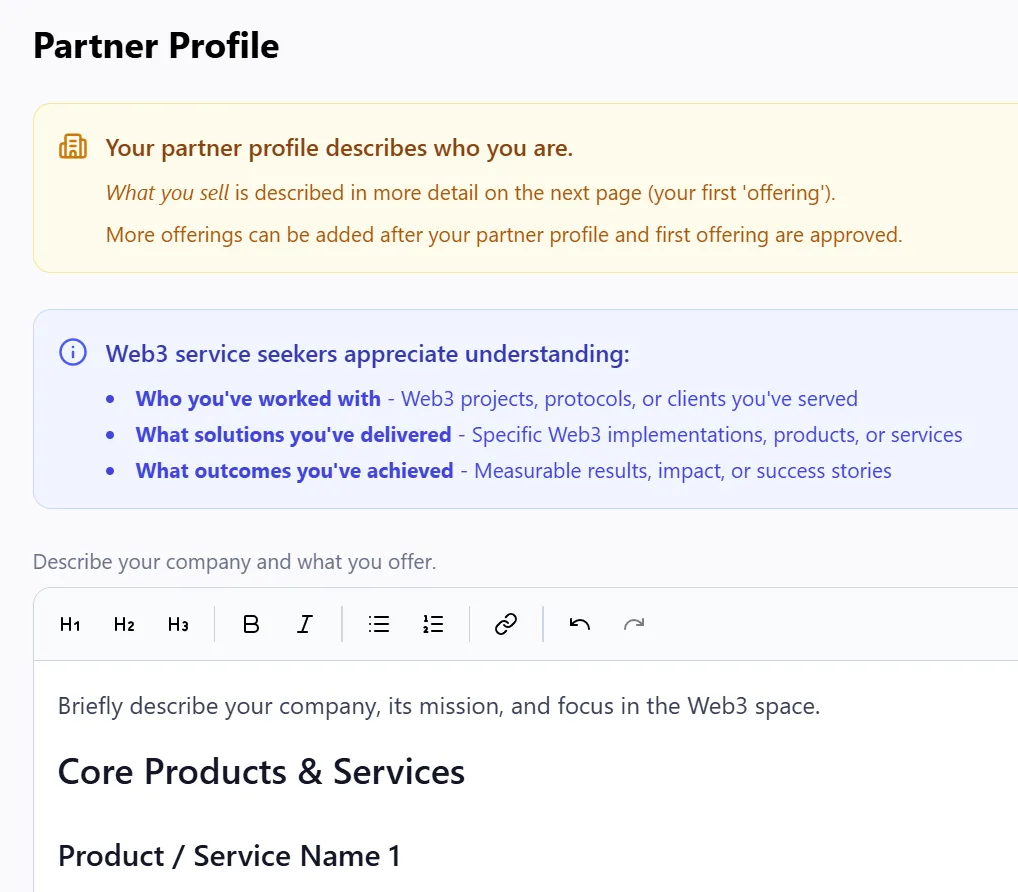
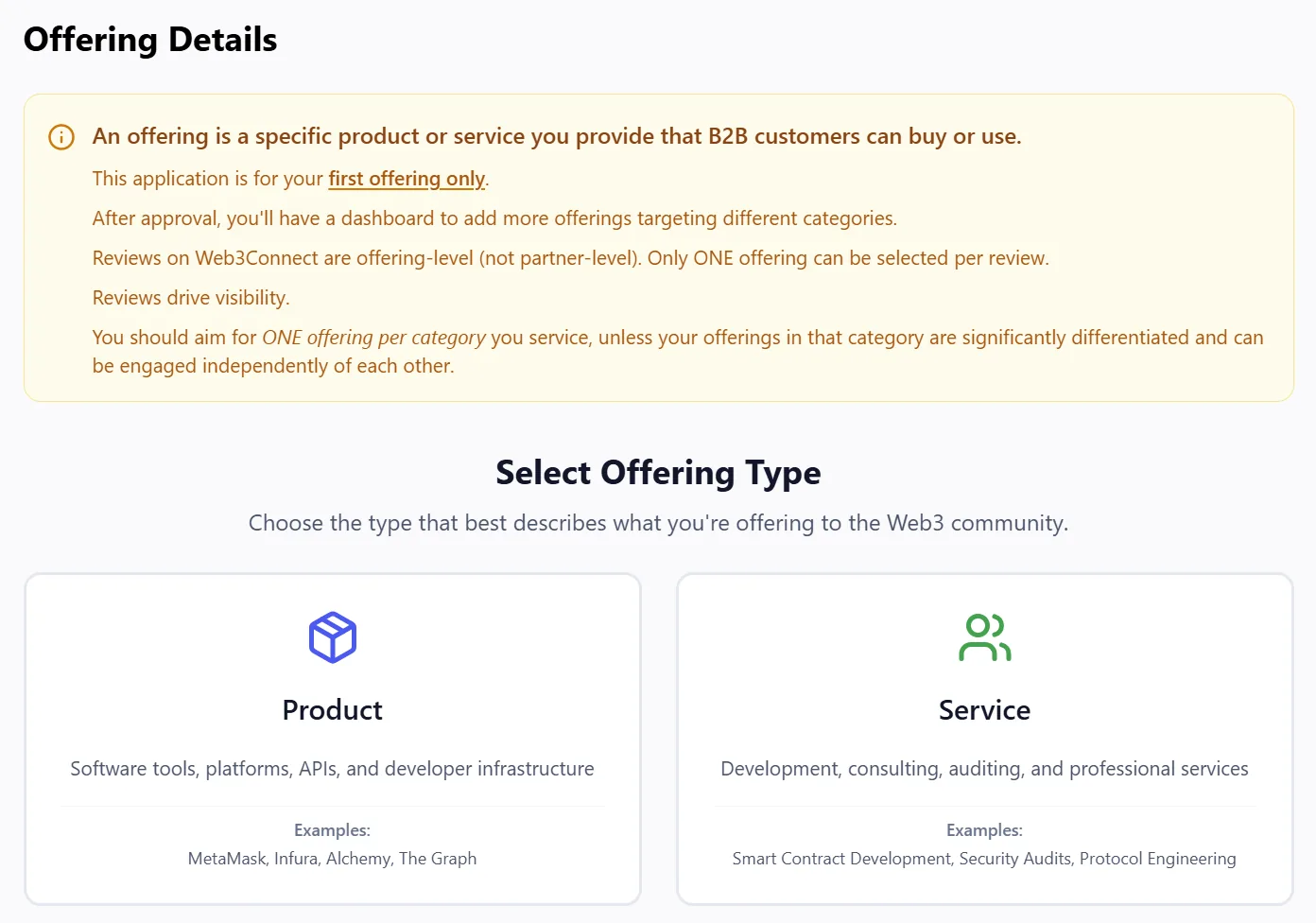
That fixed the confusion. I included this as it's an example of a feedback loop between user behavior and product design.
Rejecting what I needed the most
Three reviews arrived for a partner in the most valuable category on the site – when initial reviews were the thing I needed.
I had to reject all three, as they used fake domain names, and referenced unverifiable projects.
The whole point of the platform is that the ranking is earned, and a review site that accepts a fake review on day one undermines its value proposition publicly.
Where it got to
My email-based campaigns worked, up to a point. 72 companies claimed their profile and 48 more applied to join, from a standing start, with everything running automatically rather than taking up someone’s time. Traffic has kept growing since March despite almost no promotion.
Reviews volume continued to be flat despite the initiatives above.
It was clear that further research into partner's perspectives was needed, however my bootstrapped runway was at its end. The decline of public involvement in crypto markets combined with a shift toward AI for partner discovery meant that the wider case for continuing to invest had weakened.
I decided to find a team that could benefit from my experience.
What I learned
Key takeaways
- Know when a business problem is no longer a design problem. Significant email campaign automation across acquisition and onboarding resulted in an increase in claimed profiles, but nothing was moving the dial on review volume. Recognising that the fundamental business model may be the problem, and only further market research was worthwhile (rather than refine product further) is what experience brings.
- Data drives decisions. I implementated significant behaviour tracking from day one - including daily ranking snaphshots for all partners and offering categories. This allowed me to rapidly create business-relevant dashboards and feed email campaigns with dynamic data relevant to each partner.
- Define and test your hypotheses. Clearly defining potential blockers (awareness, education, time, value perception) gave focus to efforts to address each hypothesis.
- Timing beats persuasion. The right message at the right time can be more effective than a perfectly crafted one. Having 87.8% of users discovering they already have a profile and claiming it (rather than abandoning onboarding or creating a new one) was a fantastic outcome, and cost nothing to implement..
Are you interested in hiring someone who can perform product research, ideation, implementation & measurement?
Let's talk